- Year: 2023
- Area: 3500 m2
- Architects: nassereddine chaib architects
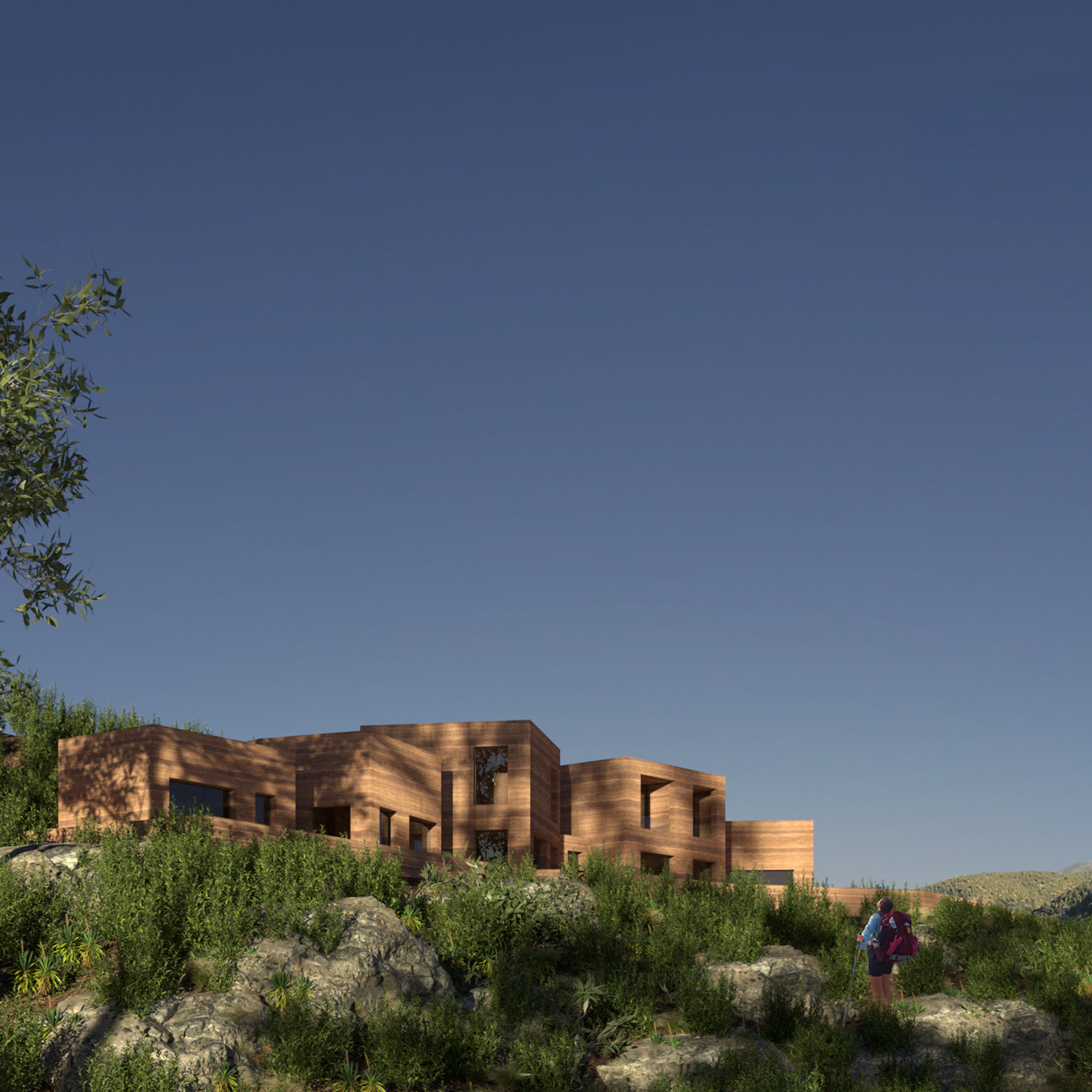
The design of the Visitors Center in the Berkane Mountains is conceived through a deliberate effort to articulate a coherent relationship between architecture, landscape, and local culture. The project prioritizes integration within its natural setting, achieved through a calibrated approach to scale, orientation, and volumetric composition. Rather than imposing a dominant architectural gesture, the intervention seeks continuity with the surrounding mountainous terrain and distant horizons.
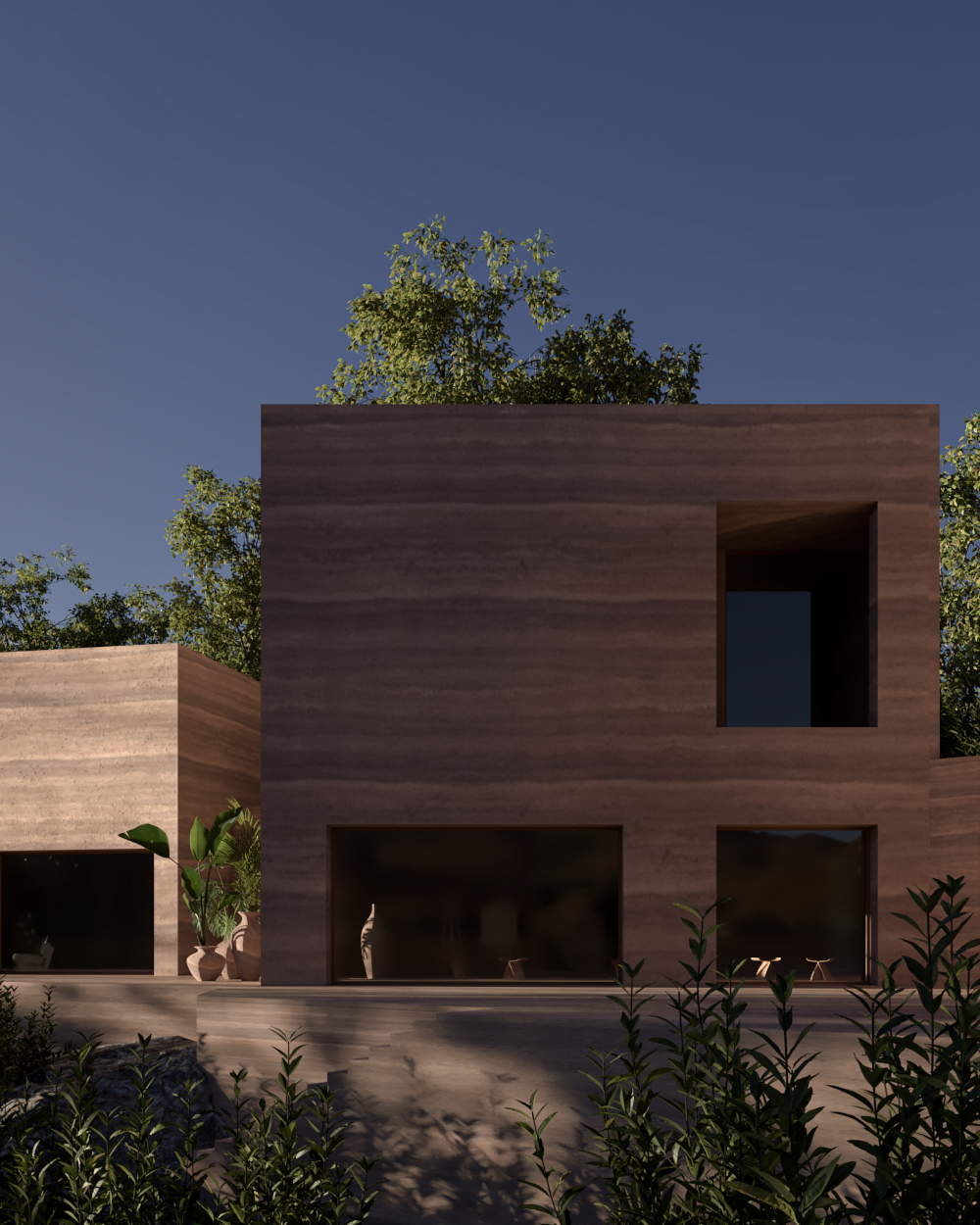
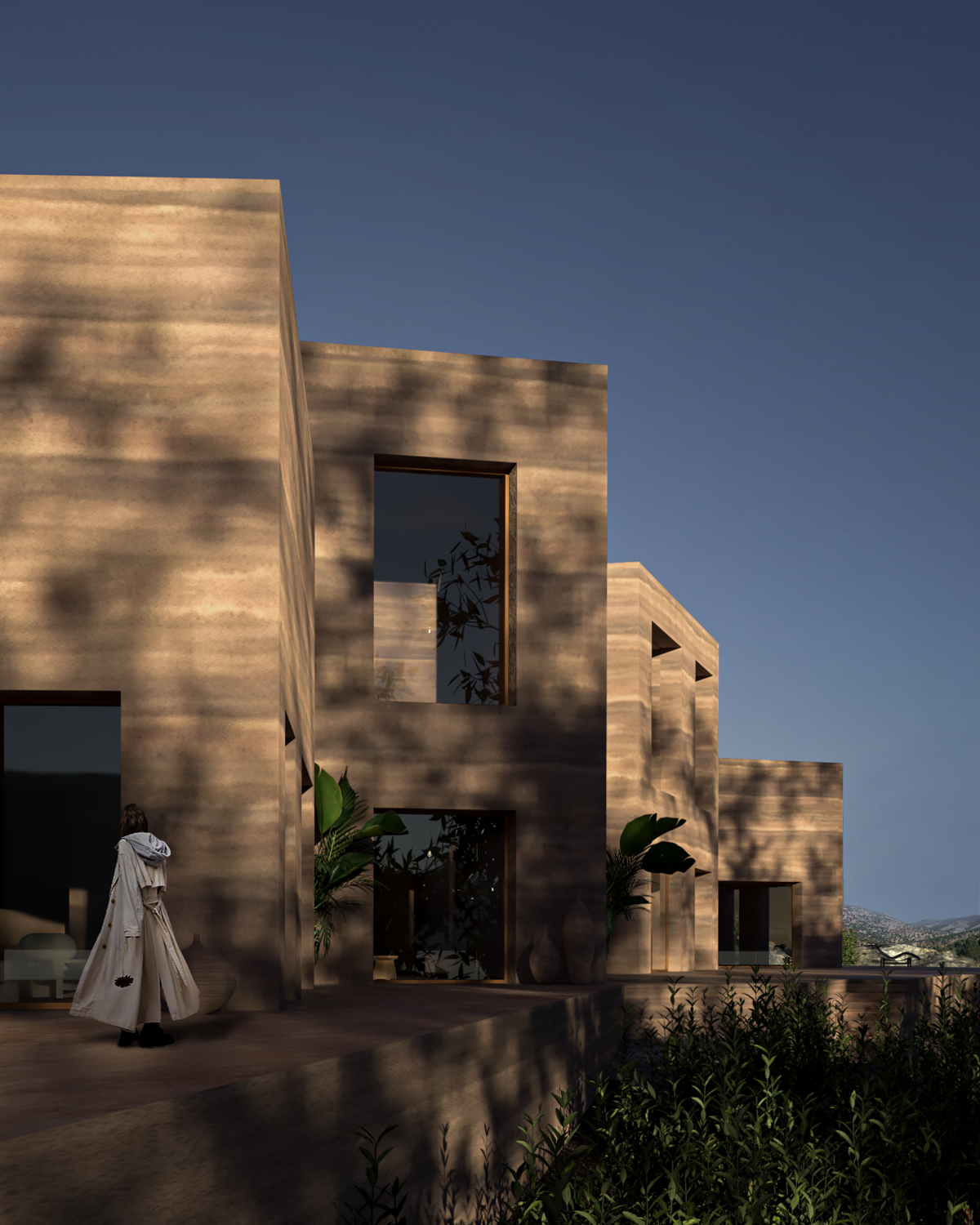
A central aspect of the design lies in the reinterpretation of regional rural vernacular architecture. This is reflected in the fragmentation of the program into a series of volumes with varied heights and proportions, collectively forming a unified composition that recalls traditional settlement patterns. Their positioning and subtle rotation respond directly to the site’s topography, grounding the project while reinforcing both visual and spatial connections to its context.
Sustainability operates as a primary design driver. The project emphasizes the use of locally sourced materials and traditional construction techniques, particularly rammed earth and timber, in order to minimize environmental impact and ensure durability over time. Beyond their ecological performance, these materials contribute to a sense of material authenticity and strengthen the project’s contextual identity.
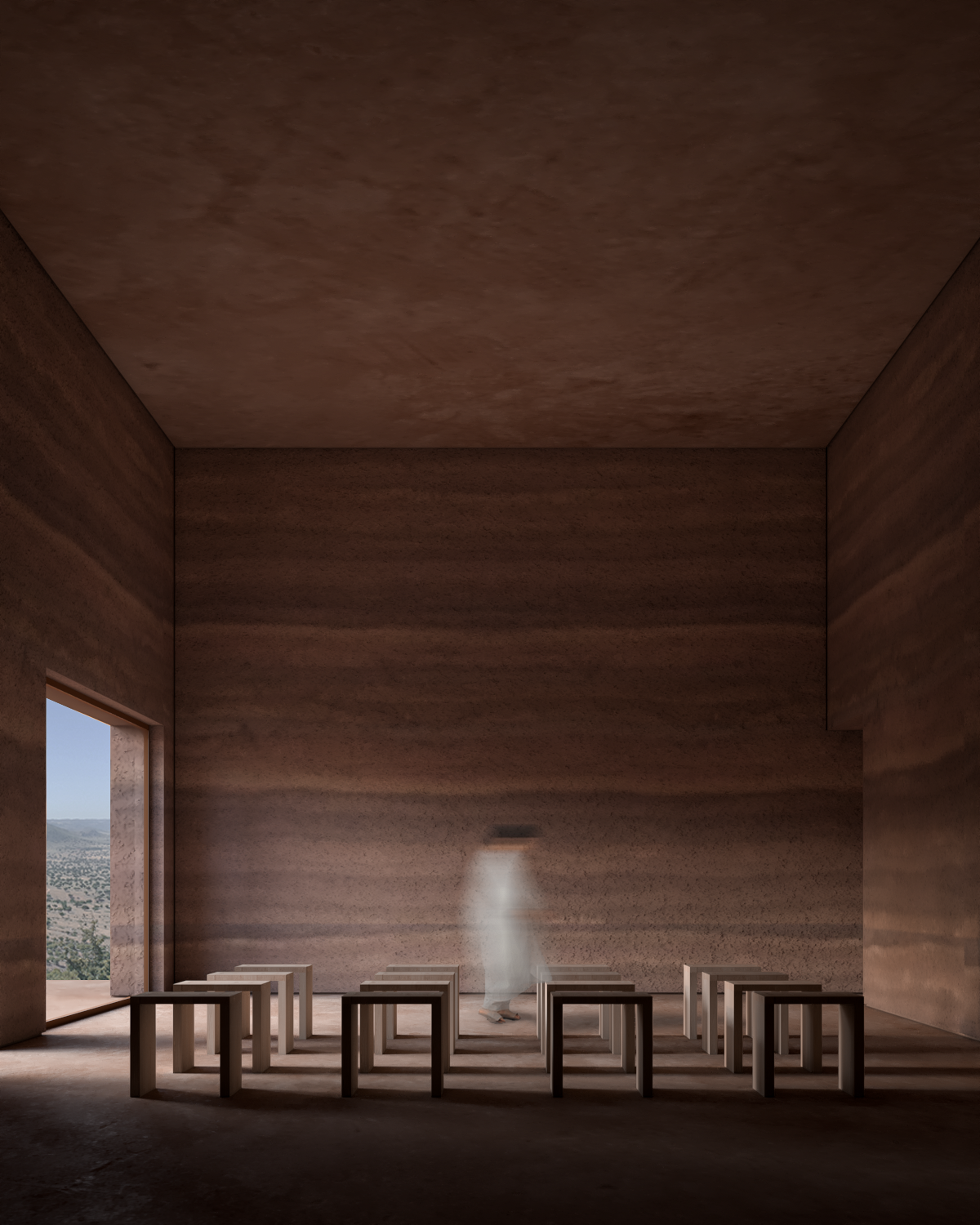
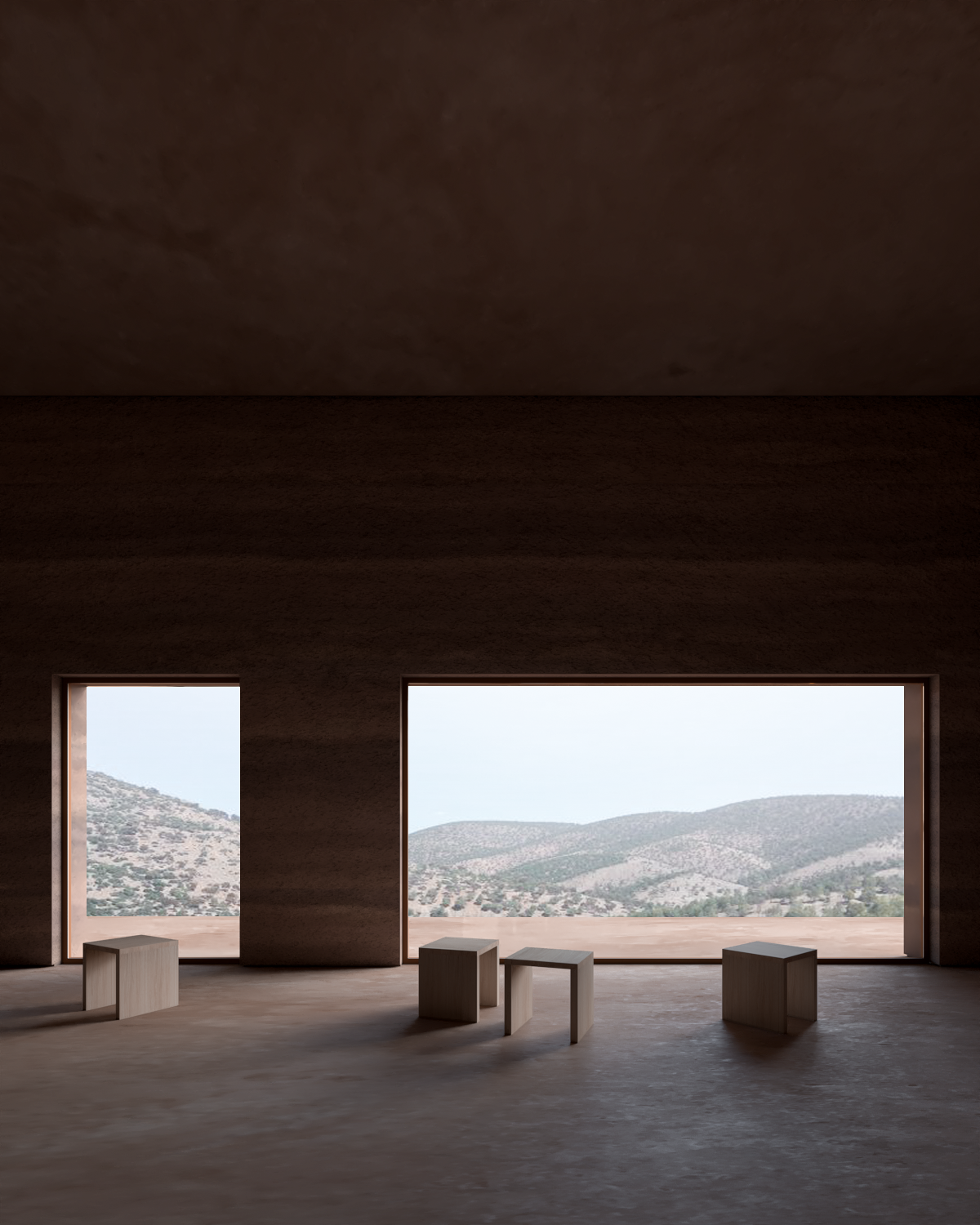
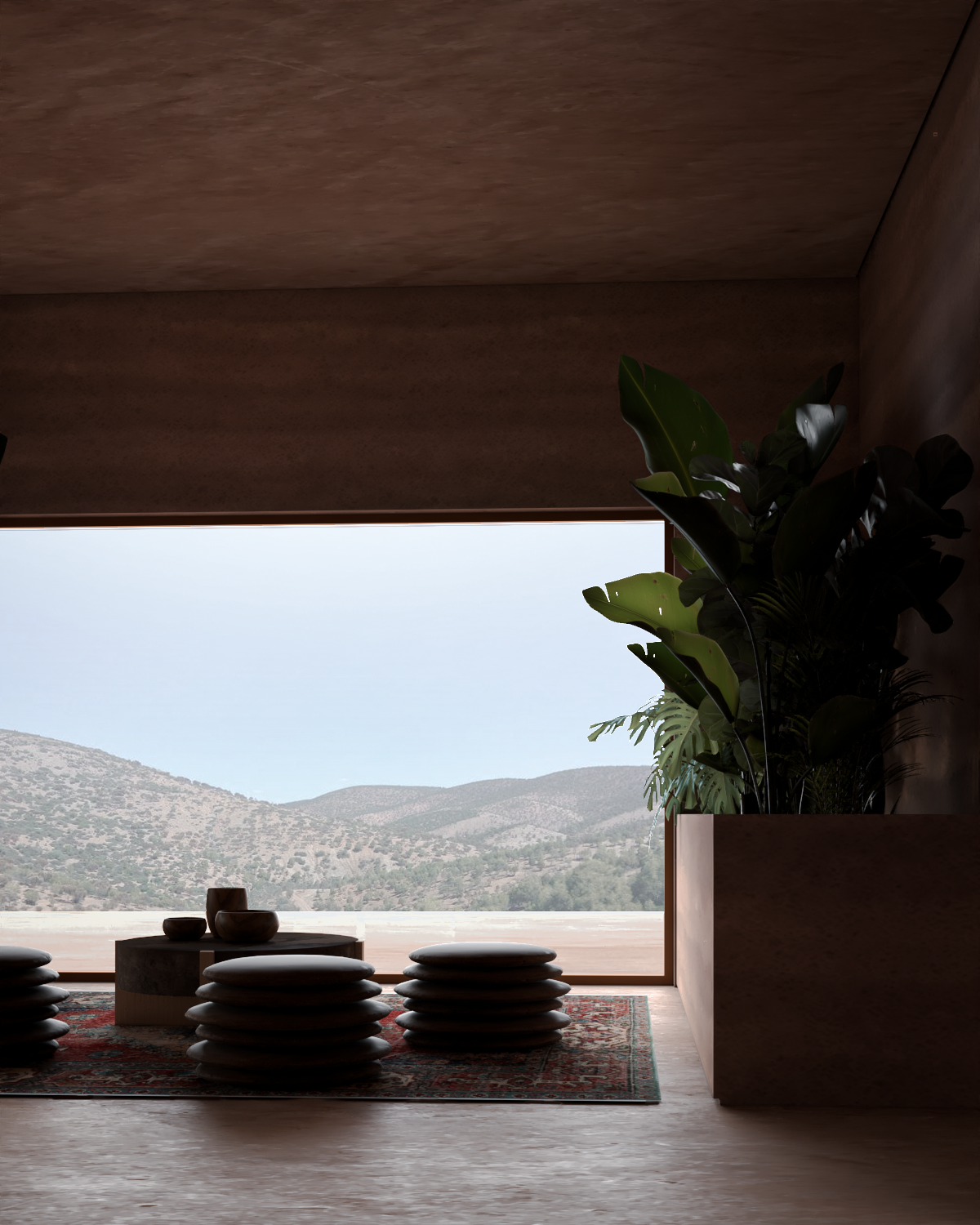
Equally significant is the intention to foster an immersive spatial experience that enhances the relationship between users and the landscape. Interior spaces are organized to maximize natural light, spatial openness, and framed views, ensuring both comfort and a continuous visual engagement with the environment. This spatial strategy extends outward through the integration of terraces and exterior areas designed for contemplation and direct interaction with the site.
Finally, the project is conceived as a platform for education and research, accommodating both visitors and scholars within a shared spatial framework. Its organization encourages exchange, learning, and reflection, positioning the center as an instrument for cultural transmission and environmental awareness. Overall, the project embodies an architecture that is contextually grounded, environmentally responsible, and culturally attuned, privileging process, integration, and experience over formal expression.